The Re Institute
calendar | past | statement | artists |proposals | contact
1395 Boston Corners Rd, Millerton NY 12546
calendar | past | statement | artists |proposals | contact
1395 Boston Corners Rd, Millerton NY 12546
|
Seven Women Chase Icebergs Friendship, and Landscape in Pouch Cove May 30th to July 11th Daisy Craddock, Gill Ord, Trine Bumiller, Karen Marston, Barbara Friedman, Elisabeth Condon, Brenda Zlamany Opening May 30th from 4pm to 6pm Curated by Brenda Zlamany |
|
This exhibition brings together seven women artists whose creative bonds stretch back decades — from studying abroad in Rome to working together at the Triangle Artists' Workshop and the Braziers International Artists' Workshop. Many of these women have been captured in Zlamany's portrait projects over the years; as curator and collaborator, she invited them to Pouch Cove not only to make work side by side, but to return to something essential about what it means to see and respond to a place together. They came from New York, Colorado, and London, each with independent projects, but the landscape drew them out of their individual practices and into a shared one. They hiked together, shared meals, critiqued each other's work, and chased icebergs along the coast — each artist finding her own relationship to the ice, to the light, and to the land. For a month, careers fell away. What remained was the work, the landscape, and each other. 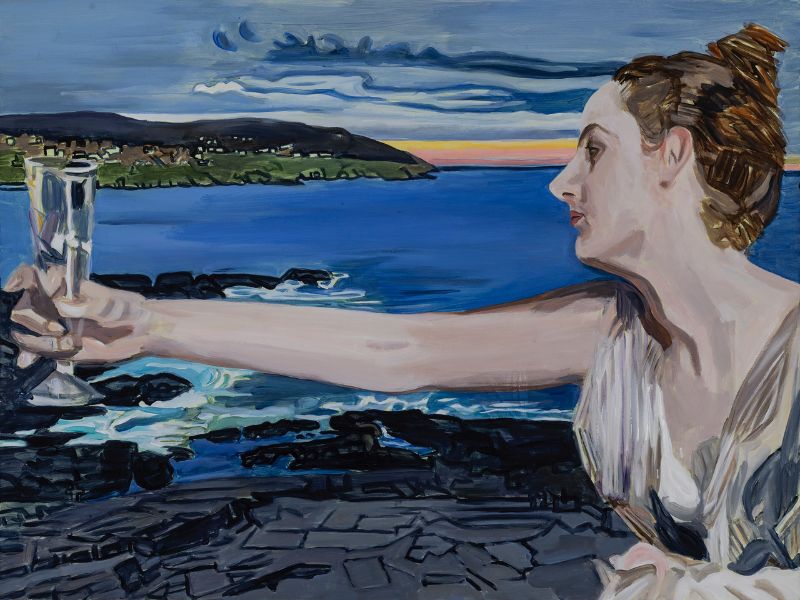 Zlamany, Sunrise Welcome, 2025, Acrylic On Panel, 18x24 Brenda Zlamany In Pouch Cove, I made A Rake's Progress — an eight-part series in which I confronted the landscape, art history, and myself simultaneously, arriving afraid to hike alone and leaving having painted my way through both. Each painting is a self-portrait filtered through an iconic figure — Pierrot, Madame X, Napoleon, Marat — not as masks, but as mirrors reflecting a psychological weather system of effort, doubt, and conviction. In the final painting, the figure dissolves entirely into a glowing iceberg: not an ending, but a becoming. Daisy Craddock Good thing I'd packed watercolor blocks for painting outdoors, because we grappled with freezing weather and gale-force winds almost every day, even though it was May. Near the end of the residency, a group of us drove five hours north to Twillingate in search of icebergs. About an hour from town we got news that our boat had been cancelled due to rough weather. Disappointed but carrying on, we all screamed when an enormous iceberg came into view, wedged right by the roadside as we drove into town. Gill Ord This residency was extraordinary, and the reasons are perhaps not the obvious ones. Of course time to think, work and walk, be amongst fellow painters. For me, the location way out in the Atlantic Ocean, remote, wild, changeable and challenging stays with me as an energy, a life force, the constant pull and the power of the horizon. Trine Bumiller Avalon is a series of paintings created during a residency at Pouch Cove Foundation in Newfoundland, Canada. I made this work while immersed in the coastal landscape — its plants, terrain, and shifting weather — as I experienced grief, memory, and renewal following the recent loss of my mother. With Newfoundland located just across the Atlantic from her native Denmark, the place became a deeply personal and symbolic point of connection. Karen Marston Newfoundland has become a profoundly inspiring locus for my interests in both ecological catastrophes and the sublime beauty of nature. The astonishing expanse of both sky and sea there is overwhelming. There is nothing like standing at the edge of a cliff surrounded by the tumult of the ocean, the undulating clouds and wild winds, and the ever-changing light. Most significant for me was the experience of the icebergs. These giant, beautiful ten- to fifteen-thousand-year-old remnants of glaciers drift across the Atlantic from Greenland, slowly melting at the end of their lifespan, like otherworldly creatures from a distant time — harbingers of climate losses and disasters to come. Barbara Friedman When I think of our residency at Pouch Cove, I remember my paint-covered floor, the fluorescent icebergs under gray skies, the festive meals, startling sunsets — among them the extraordinary views out of residency founder James Baird's windows — and, of course, Brenda's generous leadership. Partly in homage to Newfoundland's magnificent landscape, I swore off my toxic solvents and focused on water-soluble oil and ink while I was there. I worked deep into the night on different kinds of paper, and I ended up being most interested in a group of pieces that I'm calling The Figuration of the Invisible, after a phrase I've taken from the classicist Jean-Pierre Vernant. In this series, figures seem to coalesce out of an explosive primordial soup — long scroll-like pieces that are fundamentally abstract but nibble around the edges of representation. Elisabeth Condon My work approaches landscape as a construct, both real and artificial. Fluid pours, patterns, and nature layer influences from vintage patterns, Chinese scrolls, and abstract expressionism together. In the lavishly decorated, conservative household of youth my mother's wallpapers doubled as God, surrounding and surveilling me. Imagining their patterns behind the riverbeds and rocks in the canyon down the street as a child inspires my synesthetic approach to landscape now. Translucent pours of paint initiate my compositions. The pours simultaneously rupture empty surfaces and establish new, provisional space reflecting the subtropical humidity or urban density where the work is made. Moving from observation to translation and invention, the work forms an interior landscape felt as well as seen. It's no surprise that calligraphy and mountain-water painting, which I value highly, are meditative techniques involving mindfulness. Adapting their embodied, mix-and-match matrices brings a continuous transformation in which pour and pattern flow together, complicating the surface and unfolding of time. 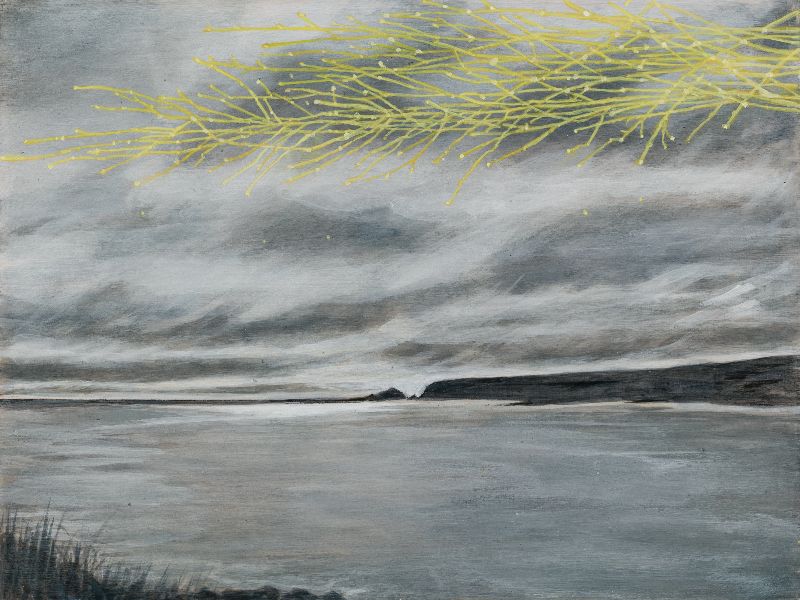 Bumiller, Darkness and Shadow, 12x16 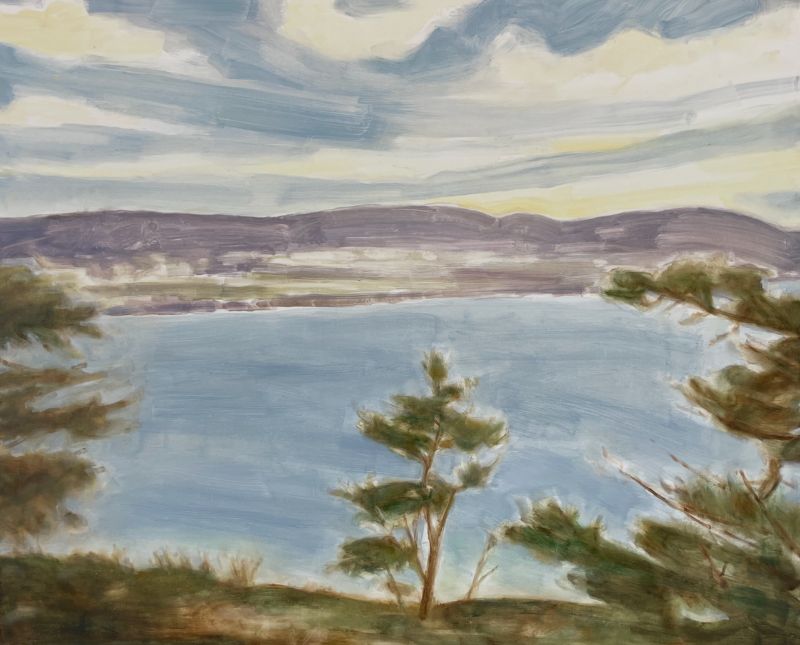 Daisy Craddock, Tuckamores with Bowl of Sky, 2025, oil on canvas, 8 x 10 inches 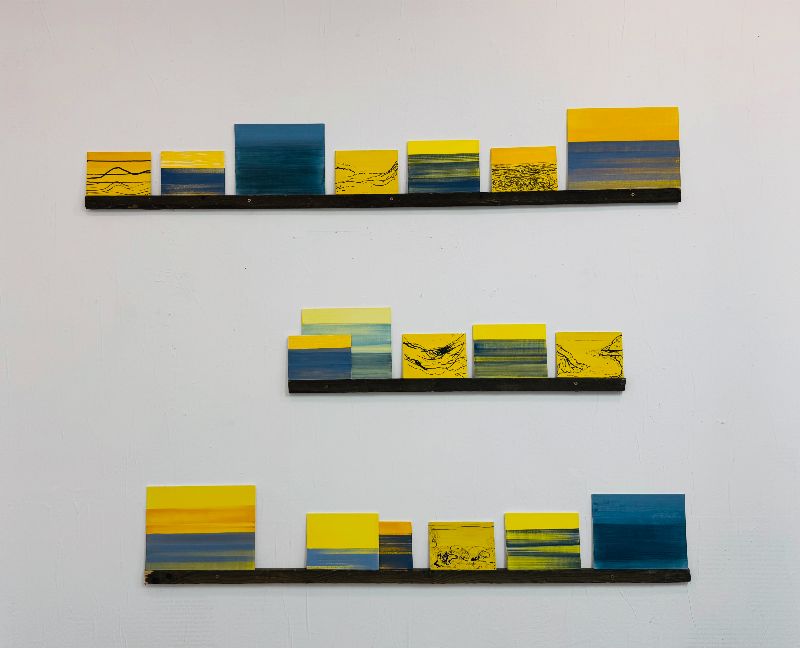 Gill Ord, ink and gouache on board, 2025, installation 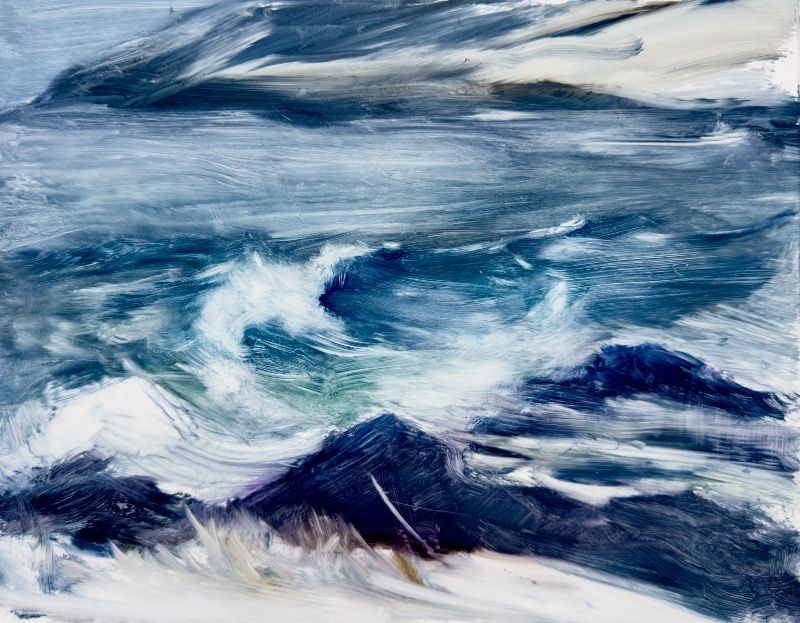 Marston, Rocks in Waves, 2025, Acrylic on Paper, 11x14in 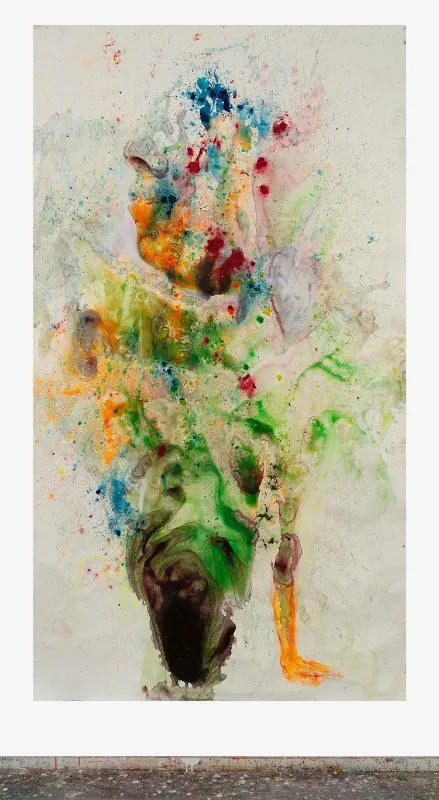 Barbara Friedman, square space 04 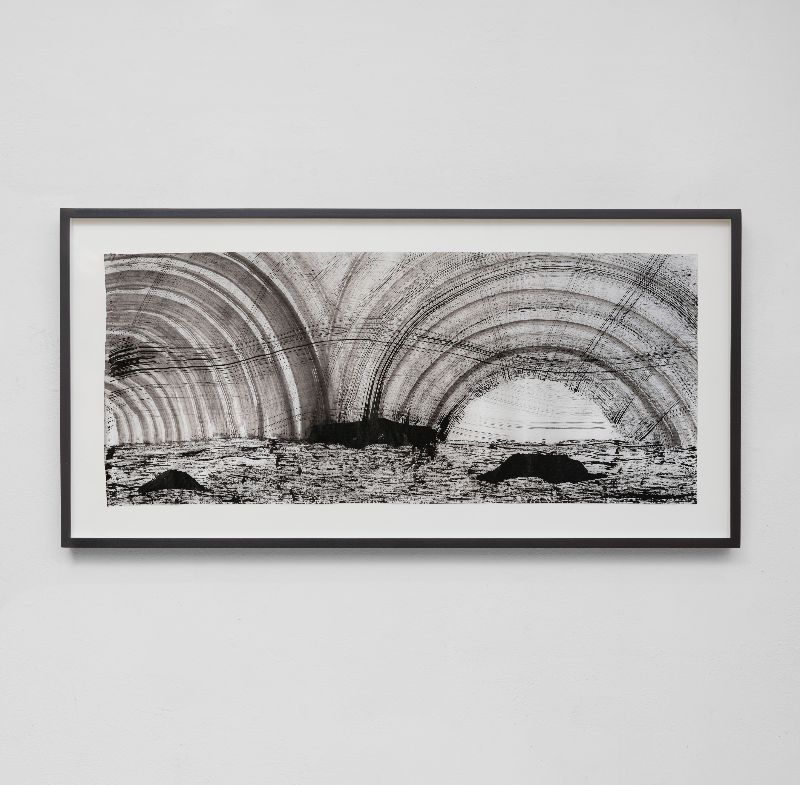 Elisabeth Condon, Big Feeling, 2025, Ink-mulberry-paper, 18.5x37-framed |