The Re Institute
calendar | past | statement | artists |proposals | contact
1395 Boston Corners Rd, Millerton NY 12546
calendar | past | statement | artists |proposals | contact
1395 Boston Corners Rd, Millerton NY 12546
|
April 11th to May 23rd Opening April 11th from 4pm to 6pm Downstairs: Estranged From The Sun Curated by Natalya Kornblum Laudi Cecilia Caldiera, Arel Lisette, Jasem Alsanea, Emily Small, Linnéa Gad, Alejandro Valencia, Natalya K Laudi, Lou Smith, Cal Siegel, Micah Angelus, Clare Koury, Ingemar Hagen Kieth, Malaika Temba Click here to see the art and the show 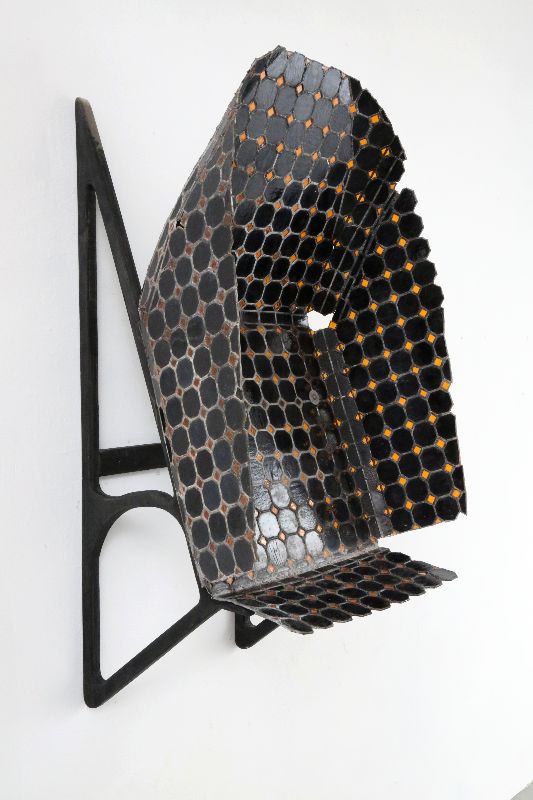 Natalya K Laudi, It Works If You Work It |
|
|
Emily Small Introdution: The Re Institute and Natalya Kornblum Laudi present Estranged From The Sun, a group exhibition focused on examining the relationship between the land in and beyond upstate New York, and its contemporary labor landscape; its tools, its people, its poetics, and the way it lives within the post-modern western imagination. The exhibition features work by Micah Angelus, Jasem Alsanea, Cecilia Caldiera, Linnea Gad, Ingemar HK, Clare Koury, Natalya K Laudi, Arel Lisette, Cal Siegel, Emily Small, Lou Smith, Malaika Temba, and Alejandro Valencia. It will open April 11th, and remain on view through May 23rd, 2026. In a note tucked into the digital folds of my phone I’ve kept the verbatim parcel with the cursor flashing: “Rousseau–cultivated; Hobbes–conquered; Locke–land is created by god for use and resources for humanity: the visual conceived as an empty place then deems resources to be commodified and not to be ‘wasted’.” In his 2009 publication Against the Anthropocene, historian TJ Demos proposes that the term Anthropocene extends past describing a geological epoch, and toward the ideological neoliberal financialization of nature. This is a pattern long on repeat since the symbolic formation of land as empty by Western philosophy led us to the expansion of European conquest that would become the colonies and the Americas as we know them today. When we look at the rural now–at farmland, old factory buildings sprawled across our rust-belt cities, or abandoned and reclaimed mill-towns of the North East–what pains the heart, and what do we see? Before the mid-nineteenth century, much of the United State’s population was settled upon farmland or in rural areas, largely operating by the rhythms of the tasks needed by the land, guided by the sun’s rotation and the season’s shifts. Industrialization greatly altered this population by promising steady wages in fledgling urban spaces. Many young women would leave their lands from across the plains, to northern Europe, to work in the textile mills that appeared across the North East in the early 1800s, and time would irrevocably shift from an agrarian model to one based on factory calls. [The Mill Girls of Lowell, National Park Services, 2025.] Now, three to four generations out from the industrial revolution we approach a successive kind of epoch, where technological advancements have observants ringing the bells at the steps of the next ‘industrial’ revolution. We careen toward ecological crises as populations from the south of India to the gulf coast of the United States and Mexico face violent, unprecedented, storms. What can looking back to a historic split between the urban and the rural tell us about what our future might hold? I am currently based in Northern California, where the second and third growth redwood forests look radically different in scale and dispersion than the original groves that covered the land before the logging industry settled in. Still when I imagine the wild in my home, it is the second growth trees that I see in my mind's eye. In the 1970s, back-to-the land movements bore communes and alternative social and spiritual practices alongside models of how the urbanite might divest themselves from their city lives here. With resources such as Country Women Magazine their intentions towards self-sufficiency made brilliant critiques of demographic access to nature, but often bypassed a kind of indigenous stewardship that left their projects repeating types of rural-fetishization we battle with on the political field today. Furthermore, our conception of the work within the land remains altered: when we envision a sickle as children of the parents who were young in the 1970s and 80s, it is images of the Cold War that come to mind, before the grain we may cut down with its blade. Although much of the population of the United States still live and work in and on designated rural areas, caught within a landscape of fungible time invented from factories estranged from the sun and season cycles that dictate work, fundamental shifts of capital have altered how life on the land might be in the dominant contemporary imagination. With a syntactic examination of landscape as a configuration of politics that surround the rural labor-imaginary, one that is gendered, sexed, and makes assumptions about time, class, and resources, this exhibition’s artists consider the poetic potential that ‘land’ holds for greater society’s progression. Rather than a superlative or critique of one or the other, the rural/urban labor divide is approached as a place where artists observe how an identification with either is created, circulated, and maintained. How can artworks help us remove the temporal oppression we oppose in our governing systems, platforming the developing needs of the land and of work, for all? In, “Metaphysics of Youth” (1913-1919) Walter Benjamin writes– As landscape all events surround us, for we, the time of things, know no time. Nothing but the leaning of the trees, the horizon, the silhouetted mountain ridges, which suddenly awake full of meaning because they have placed us in their midst. The landscape transports us into their midst, the trembling treetops assail us with questions, the valleys envelope us with midst, incomprehensible houses oppress us with their shapes. We, their midpoint, impinge on them. But from all the time when we stand there quivering, one question remains: Are we time? Arrogance tempts us to answer yes—and then the landscape would vanish. Cecilia Caldiera: 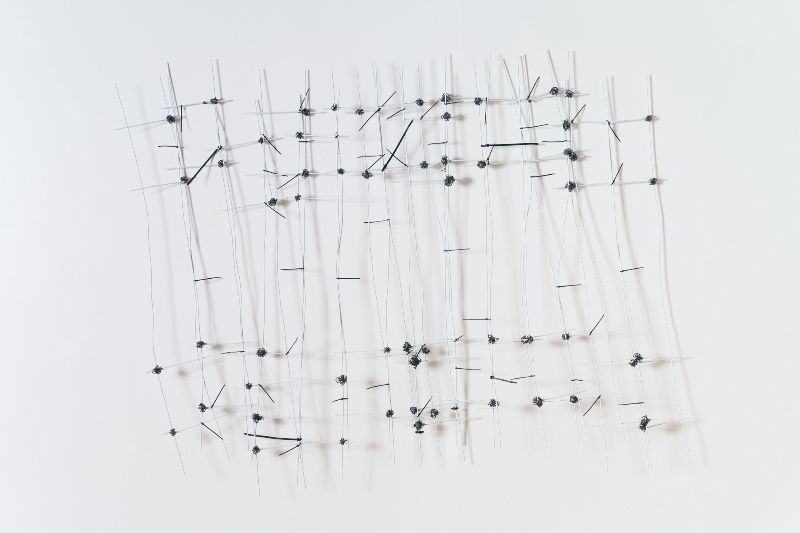 Time and Tide 2_Cecilia Caldiera Cecilia Caldiera is a New York City–based artist working across sculpture, drawing, and printmaking. Rooted in research around urban planning, waste, and ritual, her practice investigates how these systems choreograph the movements of bodies—both individual and collective—through public space. Her work traces the ways in which space shapes identity, and in turn, how communities imprint themselves back onto the built environment. Cecilia graduated with an MFA from Columbia University School of the Arts in 2023. She recently had solo exhibitions at Astor Weeks in 2023 and Subtitled NYC in 2024. Cecilia was a Neiman Center Fellow from 2021-2023, an Interdisciplinary Art and Theory Program Fellow for the 2023-2024 session, and a resident at the Hercules Art Studio Program from 2023-2025. She was awarded a grant to attend Anderson Ranch in 2022. Cecilia currently teaches at Pratt Institute and the Robert Blackburn Printmaking Workshop. /span> Arel Lisette: 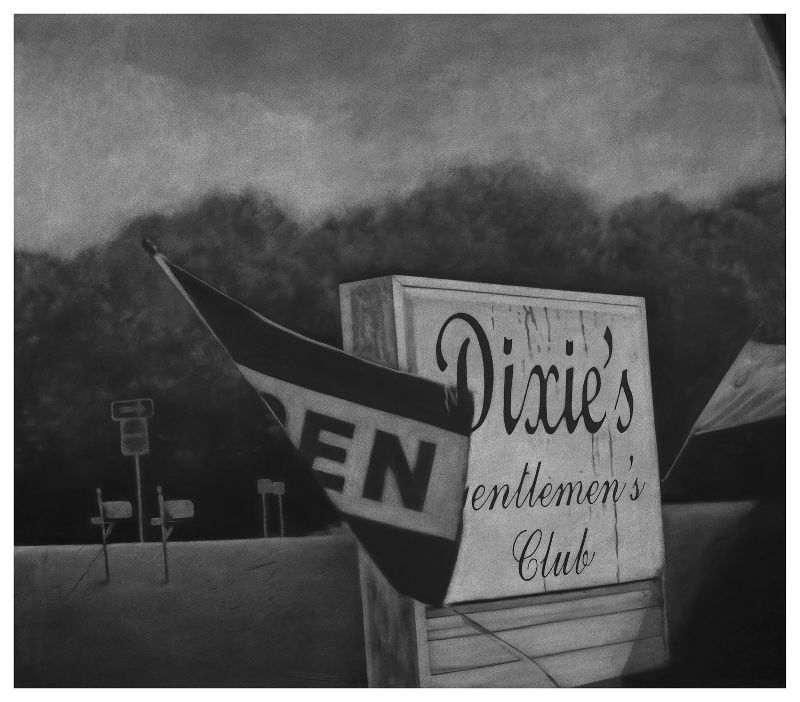 Very Clean, Arel Lisette I was raised to believe the possibility of a haunting is real. In the aftermath of the most recent United States presidential election, I have continuously travelled to Volusia County in Central Florida to document and draw the roadside business, political, and religious signs within this subtropical conservative stronghold. Navigating the streets and highways of the Southern landscape, the signs and symbols that populate the sides of the Florida road tell a uniquely American story of faith, yearning, and anger whose messages and warnings reverberate across county and state lines. While photographs allow me to record specific moments of time and place, it is through reshaping them in the process of drawing that I am able to merge reality with the imaginary to form the possibility of new narratives. I begin by saturating the pores of my paper with charcoal, and then work into this field of black by repeatedly erasing and adding material until the paper and image are imbued with a shadowy history. Drawing subtractively with charcoal on paper allows me to uncover and reflect on the nuances and darker undercurrents of the American identities and narratives held within this roadside cultural signage, convey the breadth of humanity that exists beyond the divisive representations on display throughout national media, and insist on the existential ties that bind us together. My drawings communicate that the past, present, and future are echoes of each other, and that the painful hidden narratives we carry must be made visible, reimagined, and renegotiated. Jasem Alsanea: _Jasem%20Alsanea.jpeg) A Ripple in the Desert, (short-cut), Jasem Alsanea Jasem is an Artist from Kuwait, who gives lost oral Mythologies from the Arabian Gulf, new narratives, intersecting and overlapping them with post-war reverberations. He does so through hyper-surrealistic sculptures, films, poetry, and practical effects in order to decensor collective histories, implicate the audience, and cause micro disruptions. Emily Small: 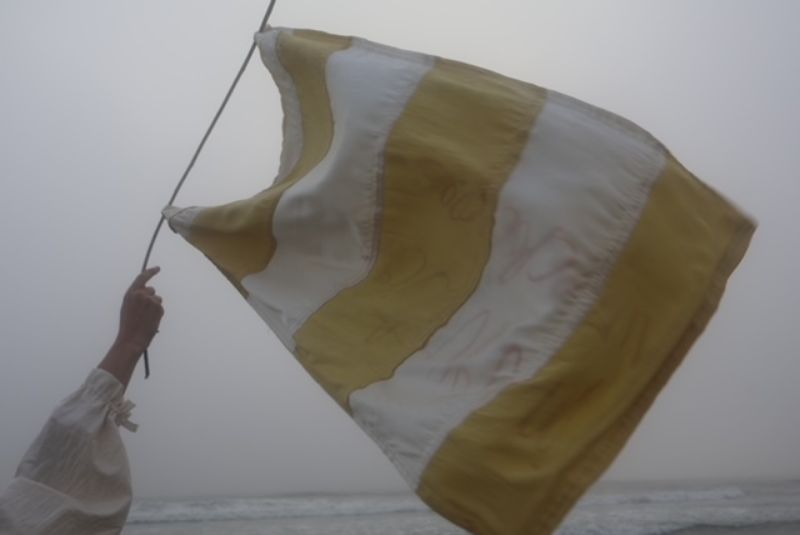 Golf Flag_Emily Small Emily K. Small is an artist and writer based in San Francisco, California. Her work primarily explores cycles of grief and optimism as they exist within systemic conditions born from her home in the West of the United States. In the cyclical, boom-bust wake of liberal-captialist governance that rules the region and beyond, theater becomes a useful tool to navigate crises, spirit, and collective determination. With a practice that encompasses the production of sets and costumes, exhibition-making, textiles, text, and dance, she explores how a movement or script, repeated, engrains itself as myth. She is concerned with the moment a piece of choreography leaves its subject and begins to circulate as world-making infrastructure. When does it become embedded in the objects around us? How does this alter our expectations of the worlds we inhabit? Emily is a graduate of the Rhode Island School of Design, Columbia University, and the Whitney Museum Independent Study Program (ISP). She has exhibited work in San Francisco, Venice (IT), New York, and Philadelphia. Emily has co-organized exhibitions at Artists Space in New York, the e-flux screening room in Brooklyn, and the Miriam and Ira D. Wallach Art Gallery at Columbia University. In 2019 she co-mounted Dollhouse Philly, a community project that took over a house in South Philadelphia. Her writing has been featured in or published by the MODA Critical Review at Columbia University, New York; The Whitney Museum of American Art, New York; Margot Samel, New York; Performa, New York; and Variable West, California. Along with artist Nicolás Colón, she is partner at Climate Control, an artist-run gallery space in San Francisco’s Mission neighborhood./span> Linnéa Gad: 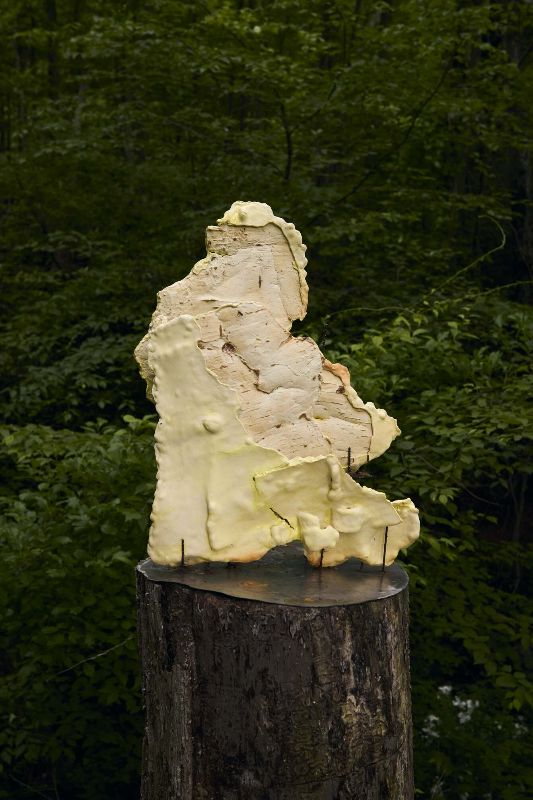 Peeling, Linnéa Gad My artistic practice is like an ecosystem—a cyclical process where ideas recur and transform across materials and mediums, forming an interconnected web that deepens with each iteration. While I primarily work in sculpture, my practice also spans painting, printmaking, installation, performance, and writing. I work with shell-related materials such as cardboard, lime, sheet metal, oyster shells, bark, and porcelain. My sculptural techniques for these materials echo calcification processes, layers that bind and build upon one another. Regardless of medium, I want to make art the way a mollusk makes its shell: through accumulated layers over time. Alejandro Valencia: 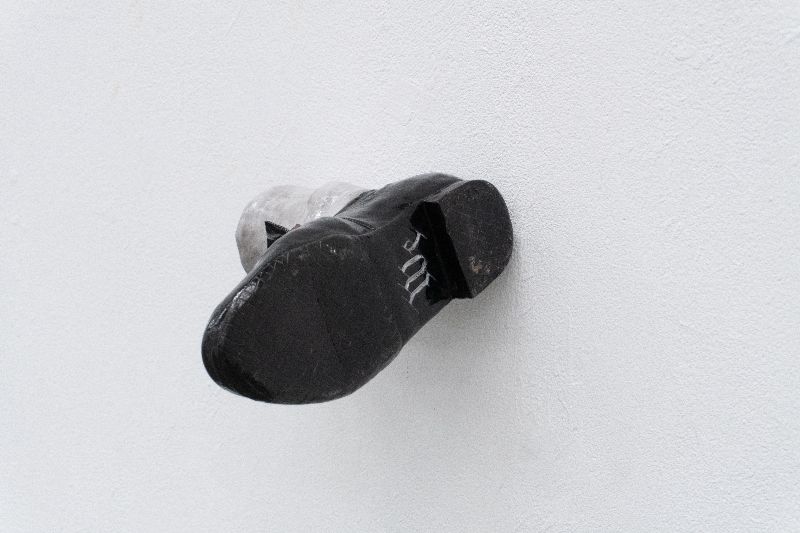 The Tree of Liberty, Alejandro Valencia (b. 1990, Pereira, Colombia) works at the intersection of history, memory, and identity, approaching them as malleable materials and unstable terrains in constant negotiation. Central to his practice is mestizaje, understood not only as a cultural condition but as a methodology of joining, weaving, and reconfiguring language, image, material, and space. His works—ranging from installations and sculptures to participatory and research-based projects—respond to the specificity of place, culture, and community, adapting to each context while questioning the symbols and myths that sustain power. Valencia’s work has been shown in solo exhibitions, including VOX POPULI (Alliance Française Pereira, 2023), En Razón de las Tumbas (Centro de Museos de la Universidad de Caldas, 2021), and PATRIA (negra) (Alliance Française Manizales, 2021). He has participated in group exhibitions such as Fault Lines (TheBlanc, New York, 2025), EARTHBOUND (Doral Contemporary Art Museum, 2024), AIM Biennial (Miami, 2023), and Arte Joven (Nueveochenta, Bogotá, 2023), among others. His work is part of the Museo de Arte de Pereira’s permanent collection. He earned his BFA from the New World School of the Arts, Miami (2017), pursued research in Historical Memory at the Universidad de Antioquia (2020) and in Art and Politics at the Universidad Jorge Tadeo Lozano (2021), and is currently an MFA candidate at Columbia University (2026). Valencia is co-founder of colectivo, an artist collective exploring DIY culture in the Global South, and of NOMUSEO, a curatorial research initiative in Colombia. He lives and works between New York, Miami, and Manizales. Natalya K Laudi: It Works If You Work It, Natalya K Laudi My practice unravels the cultural and historical repackaging of rural life as it circulates through media, from landscape paintings that once served as propaganda for westward expansion to contemporary real-estate advertisements that sell a curated pastoral ideal. I am particularly interested in the visual commodification of rural culture: how objects that were once functional tools in the hands of laborers are recontextualized as decorative markers of class. I often recreate, and queer, 19th-century objects and tools in new materials to expose the nostalgic narratives calcified in the American imagination, while examining the cognitive dissonance and code-switching required of individuals negotiating their identities within rural spaces. Through traditional craft, I explore how perceptions of competency are gendered, and how these biases are inscribed onto materials and the people who work with them— these associations shifting depending on context. Ultimately, my work investigates how rural culture is aestheticized, mythologized, and consumed, and how those processes shape our understanding of labor, identity, and place. Lou Smith: .jpg) Leftover 2, Louise Cooper Smith Working with plaster is how I express my interest in the deconstruction, disintegration, and regathering of material and form. The "tableaus" emerge, fall, shatter and fade all at the same time and color is its own force that holds density, power, and weight or buoyancy. They are a mixture of external and internal experiences and incorporate humor and play. It is important to me that my surfaces keep a sensitive record of things. Instability, transitions, survival, growing up, being a kid - these elements are all in the work too. Cal Siegel: .jpg) House Bottle 3, Cal Siegel Cal Siegel (b. 1987 Massachusetts) is a New York-based artist whose work explores how places formulate meaning and how architecture constructs and maintains historical representation. Siegel’s work frequently addresses the intersections of power, structure and entropy, drawing on architectural motifs and experimenting with scale and materiality to question our contemporary relationship to the past. His work is built through the accumulation of many small gestures over time and their purpose is a deeper questioning of whom architecture speaks for, how that is decided and why. Micah Angelus: 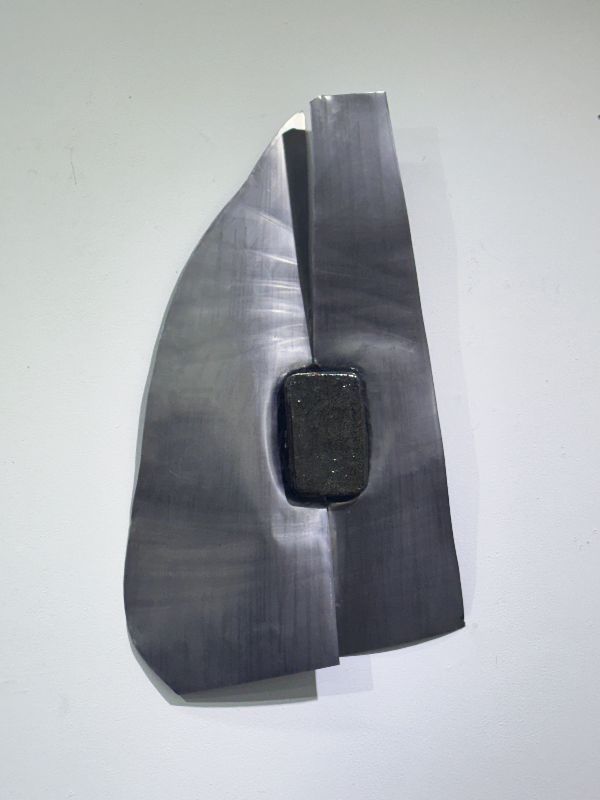 Untitled, Micah Angelus I approach painting as a site of slippage, caught between making and commentary. Whether the work appears provisional or finalized, the painted surface vacillates between image and object, critique and display. A painting can function like a flyer stuffed into a railing—part gesture, part circumstance—its meaning bound to the conditions of its display. The objects I make often resist resolution. Each one functions as both artwork and analysis. My concerns oscillate between the exploration of structural form and the realities of economic conditions, positioning a language where high and low, interior and exterior, coexist in equilibrium. Micah Angelus is an artist living and working in Brooklyn, NY. and is currently an MFA candidate at Hunter College. Clare Koury: 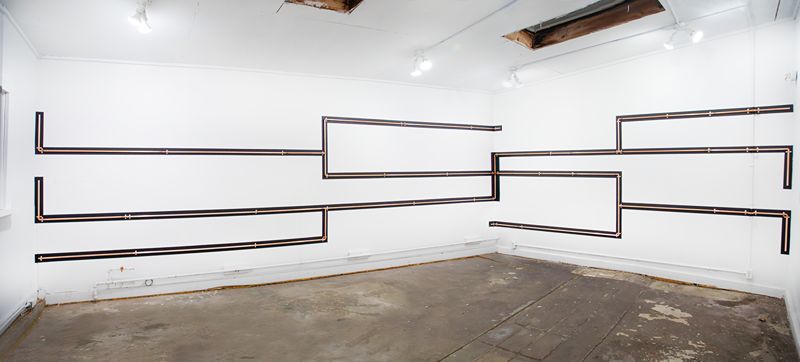 Clare Koury 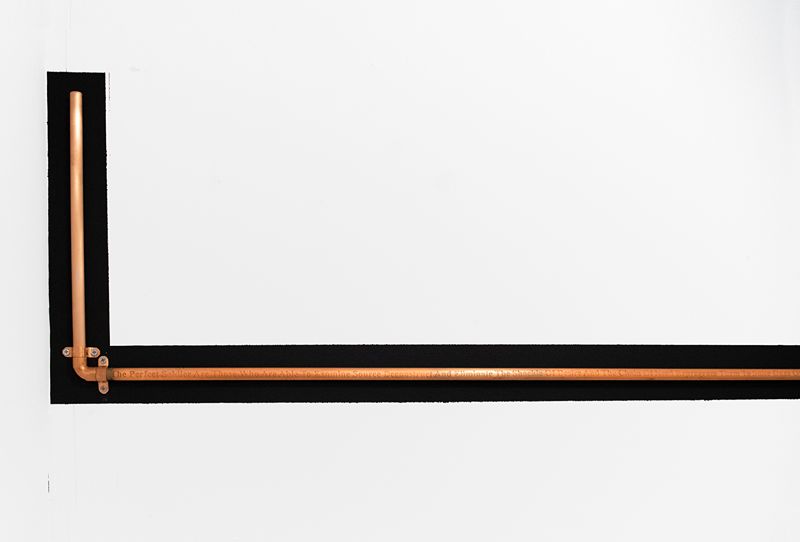 Clare Koury Clare Koury is an artist and educator from Kentucky living in New York City. Her work begins from the assumption that form is operative; that is, form exerts effects in space. Like the crystal whose outward growth is determined by relations fixed at its core, material manifests as a living consequence of its internal order, its mechanical properties and symbolic resonance being natural outgrowths of the same ordering primary principle. So then sculpture is a question of structure, and structure is a question of form's impact on the surrounding field. Koury received her MFA from Columbia University and a BA from the University of Chicago. Her early training in biblical exegesis and hermeneutics informs a method grounded in close reading, source criticism and the analysis of transmission, shaping an approach to form attentive to how meaning is conveyed, transformed, and stabilized across contexts. She is a two-time recipient of the Windgate Fellowship, serving as artist in residence at SUNY Purchase in 2025 and Josephine Sculpture Park in 2021. She has exhibited at institutions including Randy Alexander Gallery, Blade Study, the Jewish Museum, Canary Projects, Disneyland Paris and the Fall River Museum of Contemporary Art. Ingemar Hagen Kieth: 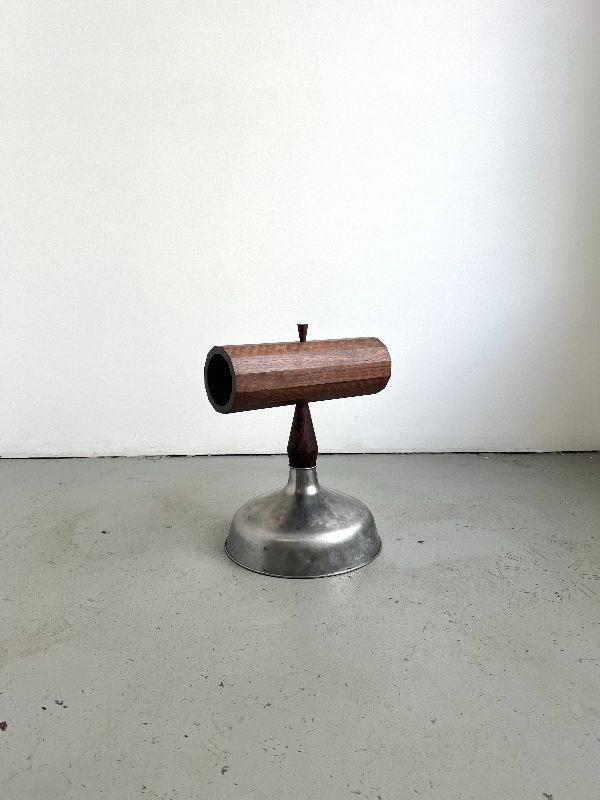 Bung Plug, Ingemar Hagen Keith Working primarily in wood, my formal language occupies a playful space between minimalism and familiarity. I’m interested in the relationships people form with the objects they use most often. My focus on functional pieces stems from the pleasure of witnessing a work embedded in daily life, where the inanimate, through use and presence, begins to feel alive. The inclination to become endeared to an inanimate object is a central pull in my design and art practice. My work explores our inescapable urge to model the built world after human and animal forms. Seeing ourselves reflected in the objects and environments around us can spark an immediate sense of intimacy and joy, an emotional response I feel deeply and aim to evoke in my work. Malaika Temba: 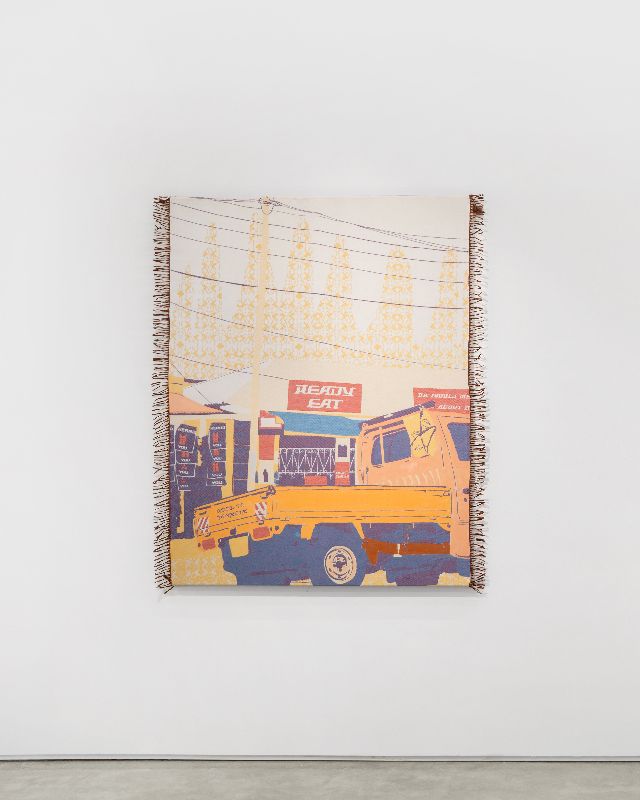 Good to Someone, Malaika Temba My work embodies a paradox of resilience: soft, even ornate, yet unbreakable. It serves as both a monument to the often-overlooked obligations of emotional labor and a record of vulnerability, sarcasm, and bliss- distilled, fragmented, and abstracted. Centering textiles as my primary medium, I explore the responsibilities, hours of labor, and patience historically expected of women in their roles as comforters, nurturers, and protectors. Textiles, as carriers of history and labor, become metaphors and markers of time, often undervalued and conflated with feminized notions of the soft and decorative. At the heart of my practice is the tension between contemporary, industrial techniques and tactile, ancestral artisanry. I integrate a wide array of methods, from painting, stenciling, and felting to Jacquard weaving, Stoll knitting, digital embroidery, laser cutting, quilting, sublimation dyeing, and silk-screening. These layers and combinations of craft reflect the complexity of human labor while drawing on Tanzanian imagery and objects from my upbringing. My use of vibrant patterns and high-texture materials transforms personal lineage into a rich and abundant resource. At its core, my work celebrates the beauty and dignity of human labor, inviting viewers into an immersive experience that bridges the personal and the universal. It provokes reflection on larger cultural systems, offering a space to honor the enduring, often invisible forces of care and creation that shape our world. Malaika Temba (b. 1996, Washington, D.C.) is a Tanzanian and American Visual Artist based in New York. Temba creates textile works that honor the lineage of the diaspora’s aunties and femmes, addressing the responsibility, time, attention and patience expected of these laborers, comforters, nurturers, and providers. She wields fabric, an oft-overlooked material conflated with gendered notions of softness, as a resilient and unbreakable format to confront labor standards and global trade. Having grown up across Saudi Arabia, Uganda, South Africa, Morocco, and the United States, her lens and creative processes embrace globalization and intercultural connection by shining light on all of its intricacies. Temba graduated with a BFA in Textiles from RISD in 2018. In 2021, she was honored as the recipient of the YoungArts Jorge M. Pérez Award and since then, she has been selected for significant residencies: MacDowell (2026), Art Omi (2023, NY), MASS MoCA (2023, MA), Bandung Residency, MoCADA + A4 Arts Alliance (2023, NY), Silver Art Projects (2024, NY) and the Textile Art Center (2024-2025). Temba has had solo exhibitions with Mindy Solomon Gallery (2021; 2024; Miami, FL), Lilia Ben Salah Gallery (2023; Paris, France), and Gaa Gallery (2025, Cologne, Germany). Her work has been collected by various public and private collections globally. |